
Douro Journal
Observations, stories and reflections from Porto, Vila Nova de Gaia and the Douro River, written from the water.
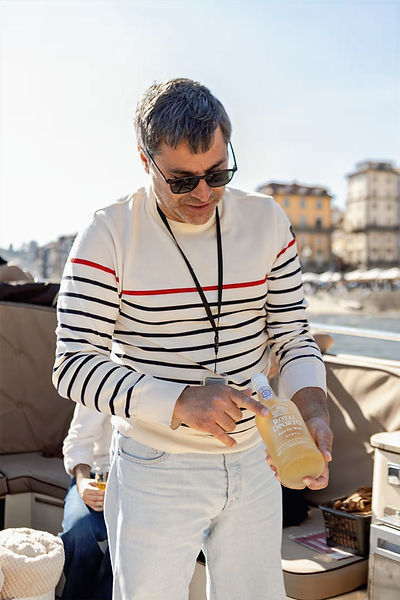
Since 2017 I have spent thousands of hours navigating the Douro River. These notes are not travel guides. They are observations, stories and reflections gathered from the river.
Journal Entry #1
Why does the Ribeira feel so authentic?
After years navigating the Douro River, there is one question I hear again and again:
Why does the Ribeira of Porto feel so authentic?
Visitors usually notice the colourful houses first, the cafés, the riverside terraces and one of the most photographed views in Portugal.
But after a while, many realise there is something else.
The Ribeira feels real.
What many visitors do not realise is that this authenticity was never designed.
For centuries, this waterfront was the economic heart of Porto. Boats arrived and departed along the Douro. Goods moved through warehouses. The river was not a backdrop for visitors; it was part of everyday life.
But cities change.
As maritime activity gradually moved away from the historic waterfront, investment followed. Other parts of the city modernised more rapidly, while the Ribeira changed more slowly.
Part of what people admire today is the result of that slower transformation.

When I look at the Ribeira from the river, I do not see only buildings. I see traces of different moments in the life of the city.
I see a waterfront that once connected Porto to the world.
I see a place that, for many years, was no longer at the centre of the city's economic ambitions.
And I see a neighbourhood that has been rediscovered by visitors from every corner of the world.

The Douro River offers a perspective that is difficult to find from the streets above.
From the water, it is possible to see different chapters of Porto's story at the same time. The old commercial waterfront that once connected the city to the world. The years when economic activity gradually moved away from the river. And the city we see today, where visitors once again gather along the waterfront to experience Porto from the Douro.
Perhaps this is why the Ribeira feels authentic.
Not because it was frozen in time, but because time remains visible.
Each building, each façade and each narrow street seems to carry traces of a different period in the city's history.
Seen from the Douro River, the Ribeira is more than a postcard.
It is a reminder that cities are not built only from stone and streets.
They are built from memory.
And perhaps that is why, during many of my tours, there comes a moment when cameras are lowered and conversations become quieter.
People stop trying to photograph the Ribeira.
They simply start looking.
Interested in experiencing Porto from the water?
Journal Entry #2
When the Douro Was the Road
Rabelo boats, Port wine and the working waterfront of Vila Nova de Gaia
Today, visitors admire the traditional Rabelo boats moored along the waterfront of Vila Nova de Gaia.
They photograph the wooden hulls, the tall masts and the rows of barrels resting on deck. For many people, the boats are simply part of the landscape.
A symbol of Porto.
A symbol of the Douro.
But these boats were never built to be symbols.
They were working vessels, designed for a river that was very different from the one we know today.
Before the construction of the dams that now regulate the Douro, the river followed its own rhythm. Water levels changed with the seasons. Winter rains could dramatically increase the current, while strong winds and spring tides created additional challenges near the river mouth.
For centuries, the Douro was not only a river.
It was a road.

The wine stored in the lodges of Vila Nova de Gaia arrived from the Douro Valley aboard Rabelo boats specially adapted to the conditions of the river.
Their shallow hulls allowed them to navigate sections that would have been difficult for many other vessels.
The journey downstream could be completed in only a few days.
The return journey was another matter.
Travelling against the current, often without favourable winds, crews could spend weeks making their way back upriver.
The square sail helped whenever conditions allowed, but much of the work depended on experience, judgement and physical endurance.
The river demanded respect.
Every voyage required skill, local knowledge and an understanding of conditions that could change from one season to the next.

The waterfront of Vila Nova de Gaia still preserves traces of this working past.
One detail often goes unnoticed.
The stone quays along the river were built with a deliberate slope rather than as vertical walls.
The reason was practical.
Heavy barrels of Port wine arriving from the Douro had to be unloaded from the boats and moved towards the lodges above. The inclined surface made that task considerably easier.
Today, most visitors walk past these quays without noticing their shape.
Yet they are among the most authentic reminders of the role that this waterfront once played in the wine trade.
The lodges, the boats and the riverfront were all part of the same system.

When I pass the waterfront of Vila Nova de Gaia, I often find myself looking beyond the boats.
The Rabelos attract most of the attention, but they tell only part of the story.
The river tells the rest.
For centuries, the Douro connected vineyards, villages, estates, warehouses and merchants through a transport network shaped by geography rather than engineering.
Today the dams have changed the river.
Roads and railways have replaced the old journeys.
The transport of Port wine no longer depends on sails, currents or the strength of the crews.
Yet the boats remain.
The quays remain.
The lodges remain.
Together they preserve the memory of a time when the Douro was more than a landscape.
It was a road.
Interested in experiencing Porto from the water?
Journal Entry #3
Watching the Seventh Bridge Take Shape
The Ponte Ferreirinha, observed from the Douro, 2024–2026
I pass this part of the Douro almost every day.
For years, the view was familiar: the Arrábida Bridge, the riverbanks of Porto and Vila Nova de Gaia, and the houses rising above the water.
Then, slowly, something began to change.
A new bridge was coming.
The construction of the new crossing, part of the Rubi Metro Line, began in the first months of 2024, following the formal start of the project in January. The first works included preparation and foundations.
At first, there was almost nothing to see from the river. Just the first signs of a much larger structure beginning to take shape along the banks.
By 2025, the change was becoming much easier to see.

Cranes stood above the riverbanks, and sections of the new bridge were beginning to take shape. Little by little, the construction was becoming part of the river landscape.
From the boat, I see the project differently.
I see it in fragments.
A new section appears.
A crane moves.
Something that was not there a few weeks earlier suddenly becomes part of the view.

One of the things that interested me most was how the bridge could be built without permanent supports in the middle of the Douro.
The main structure is being built progressively from the two sides. From the water, you can see the sections advancing little by little, supported by the structures already in place.
The construction method will involve temporary towers and cables as the structure continues to advance. These will eventually be removed, leaving the finished bridge behind.
From the water, however, what you see now is very different from the finished project.
For now, there are cranes, concrete structures and unfinished sections. Each time I pass, another part of the bridge seems to have appeared.
There is also something curious about the way this new bridge has already entered Porto's tourism story.
It is the seventh crossing between Porto and Vila Nova de Gaia.
Yet, while the bridge is still under construction, some river cruises have already started advertising their tours as “Seven Bridges” cruises.
I find that interesting.
From the river, you can still see the seventh bridge being built.
For those of us who pass it regularly, the construction itself is still part of the story.

Project visualisation — Ponte Ferreirinha
When I look at this image of the finished project, it is difficult to imagine that one day the cranes and temporary structures will simply be gone.
For now, I still see the bridge arriving.
I have watched this familiar stretch of the Douro change little by little.
One day, the construction will be finished, and the new bridge will simply be part of the view.
But I will remember a time when it was not there.
I have watched it arrive from the river.
Interested in experiencing Porto from the water?